
Orchestrating the
"Why Verizon" B2B Narrative
A Personalization & Conversion Engine
Project Overview
Client: Verizon Business
Role: Designer (UX/UI & Systems Architecture)
Agency: Level Studios, Publicis CRMOne Team
Environment: 100% Remote collaboration via Figma, Jira, and Teams with corporate brand stakeholders to align with Verizon’s unified channel strategy.
Strategy and Planning
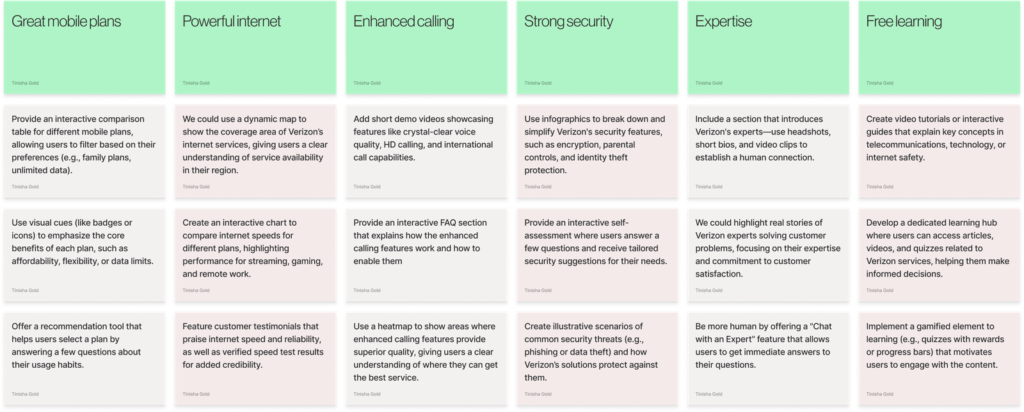
Based on the research, I developed a UX strategy that focused on clear communication of Verizon’s value propositions, ensuring visual and contextual consistency, and creating a personalized experience.
Problem Statement
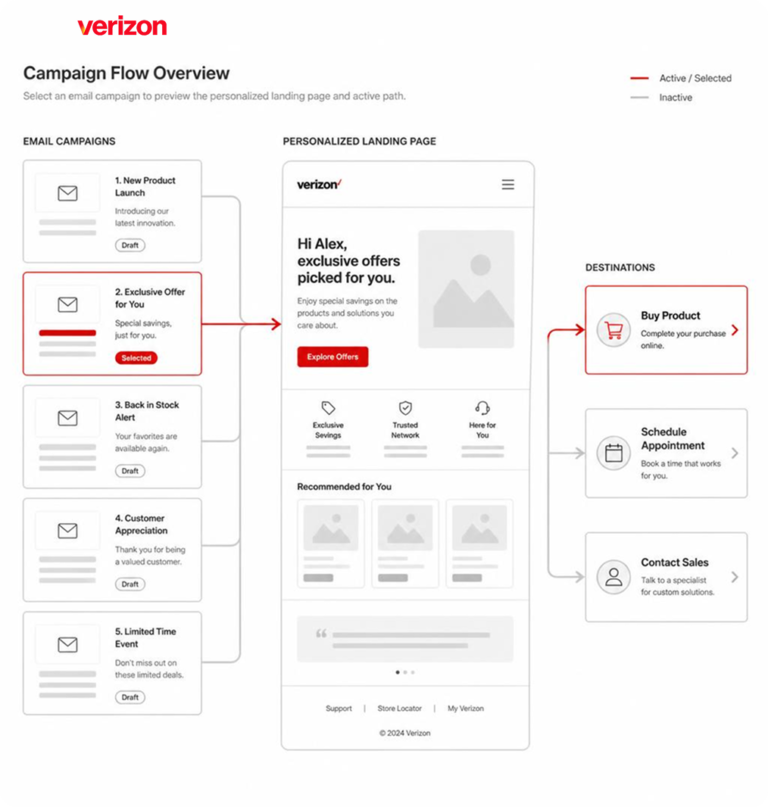
Small to mid-size prospects clicking through highly segmented email campaigns were dropped onto static, generic Verizon Business landing pages. The lack of visual and narrative continuity caused immediate cognitive load, message fragmentation, and high bounce rates.
multi-channel marketing
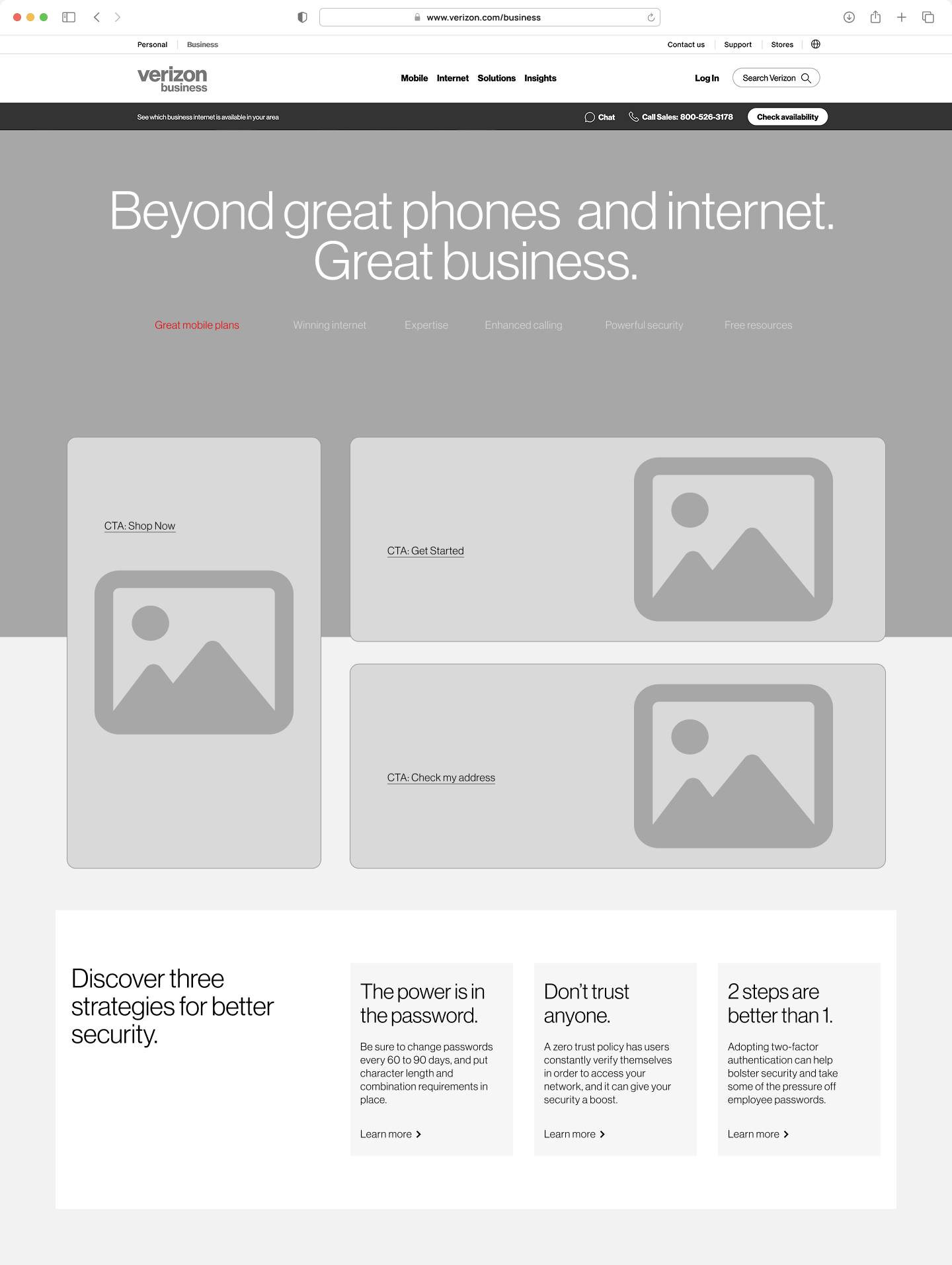
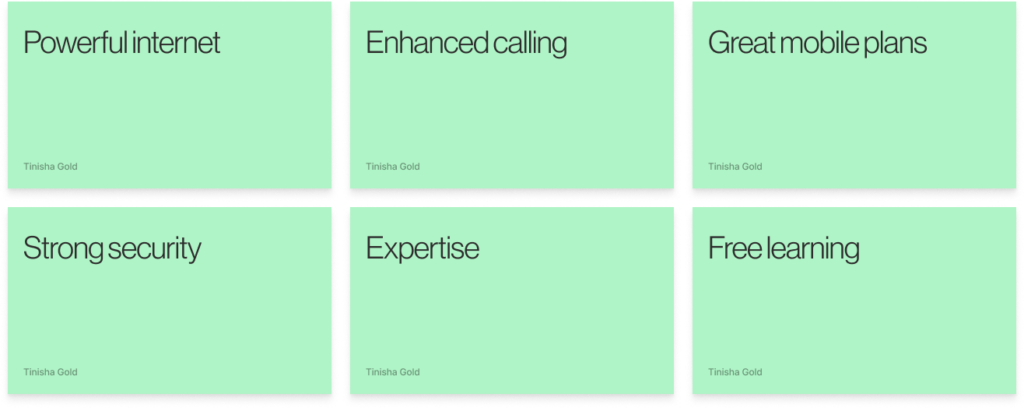
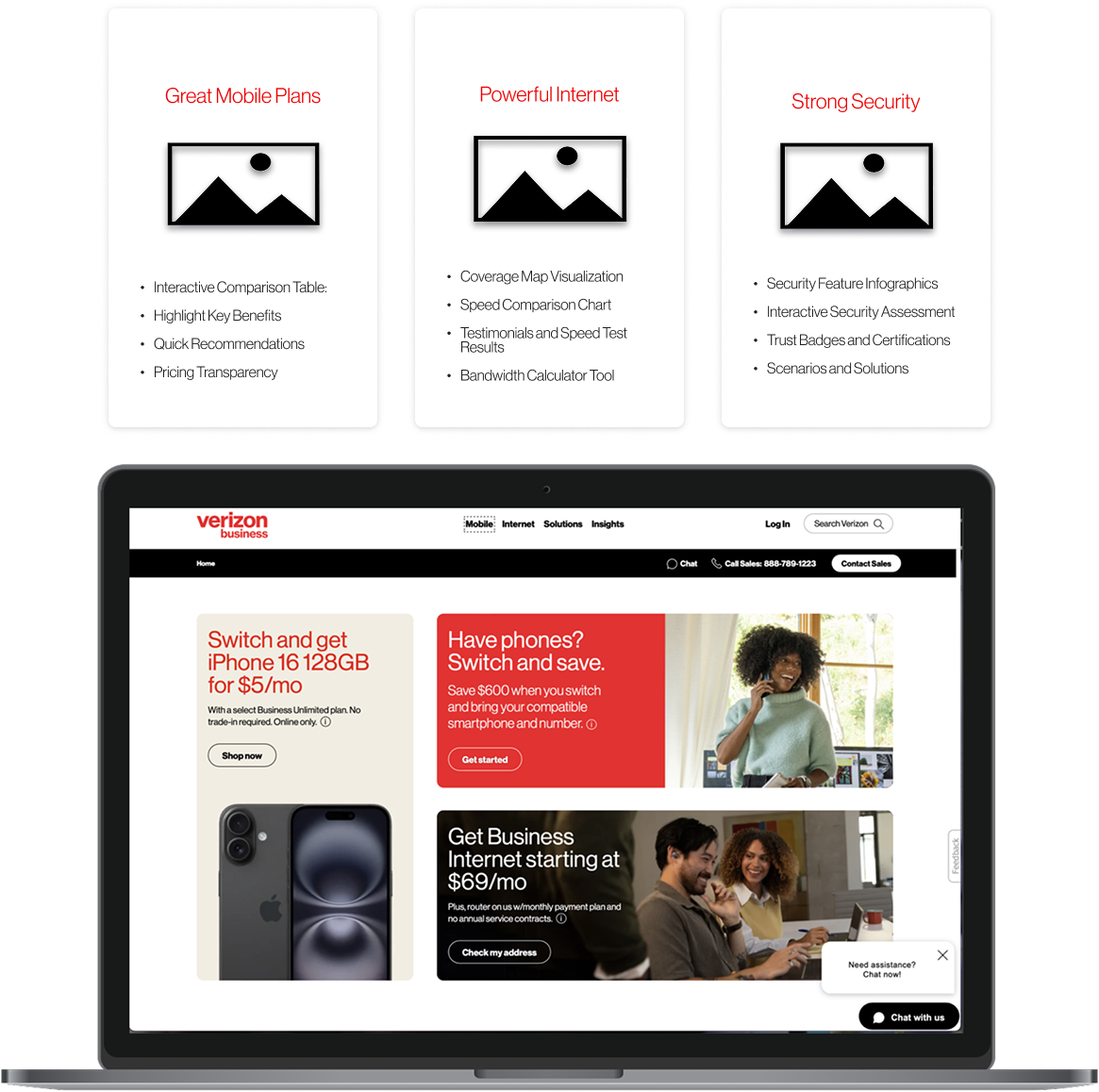
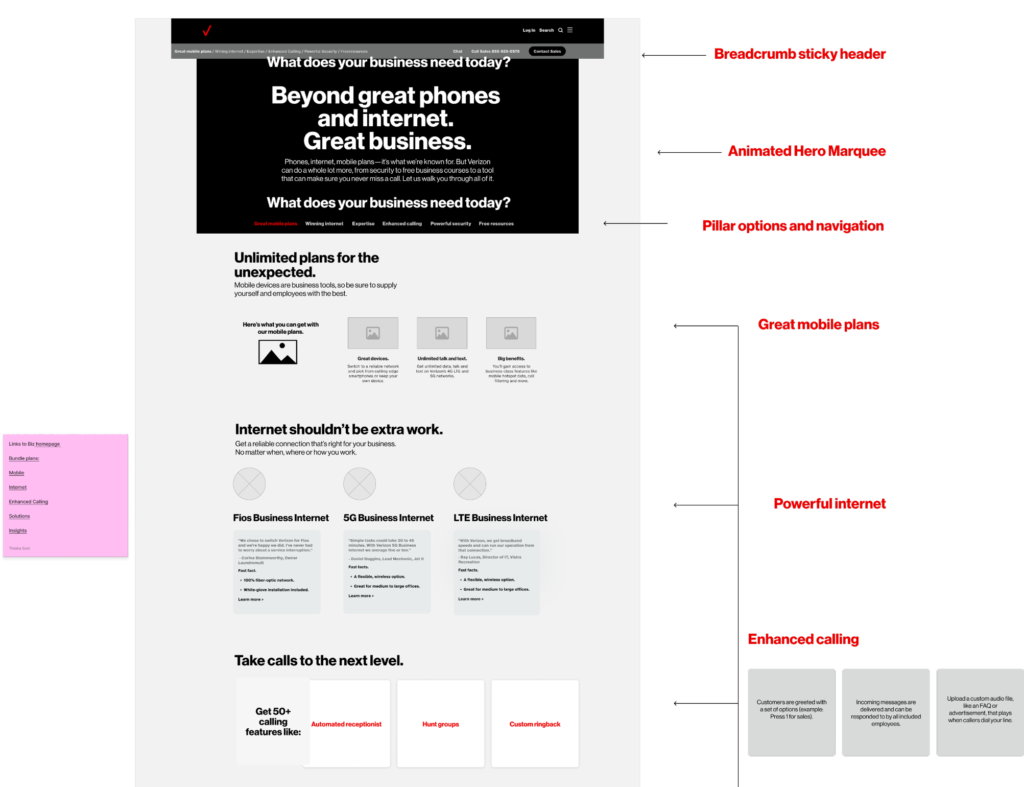
Verizon Business launched a premium, campaign built around “6 Strategic Pillars"
Explore key insights designed to serve as a high-conversion narrative bridge—transforming fractured email traffic into an immersive, personalized, and intent-driven funnel.
Users & Audience
The Primary Prospect:
Mid-market B2B decision-makers (IT Directors, Operations Managers, CTOs) who are time-poor, highly analytical, and require rapid proof of reliability before engaging with sales.
The Secondary User (Internal Marketing Teams): Non-technical content authors who needed a scalable, foolproof system to deploy variations of the campaign without breaking brand integrity or design alignments.
Roles & Responsibilities
My Role: Lead Product Designer (UX/UI & Systems Architecture).
The Cross-Functional Team: Product Manager, Super Sr, Copywriters, Front-End Engineers, and Marketing Operations Specialist.
Environment: 100% Remote collaboration via Figma, Jira, and Slack, syncing closely with corporate brand stakeholders to align with Verizon’s unified channel strategy.
Scope & Constraints
- The Marketo Sandbox: The design system had to exist within the rigid layout constraints of Marketo’s code interpreter, meaning complex custom JavaScript or fragile CSS animations were off-limits.
- Timeline: A 4-week sprint from concept to deployment to align with the global media push of the Six (6) Pillars campaign.
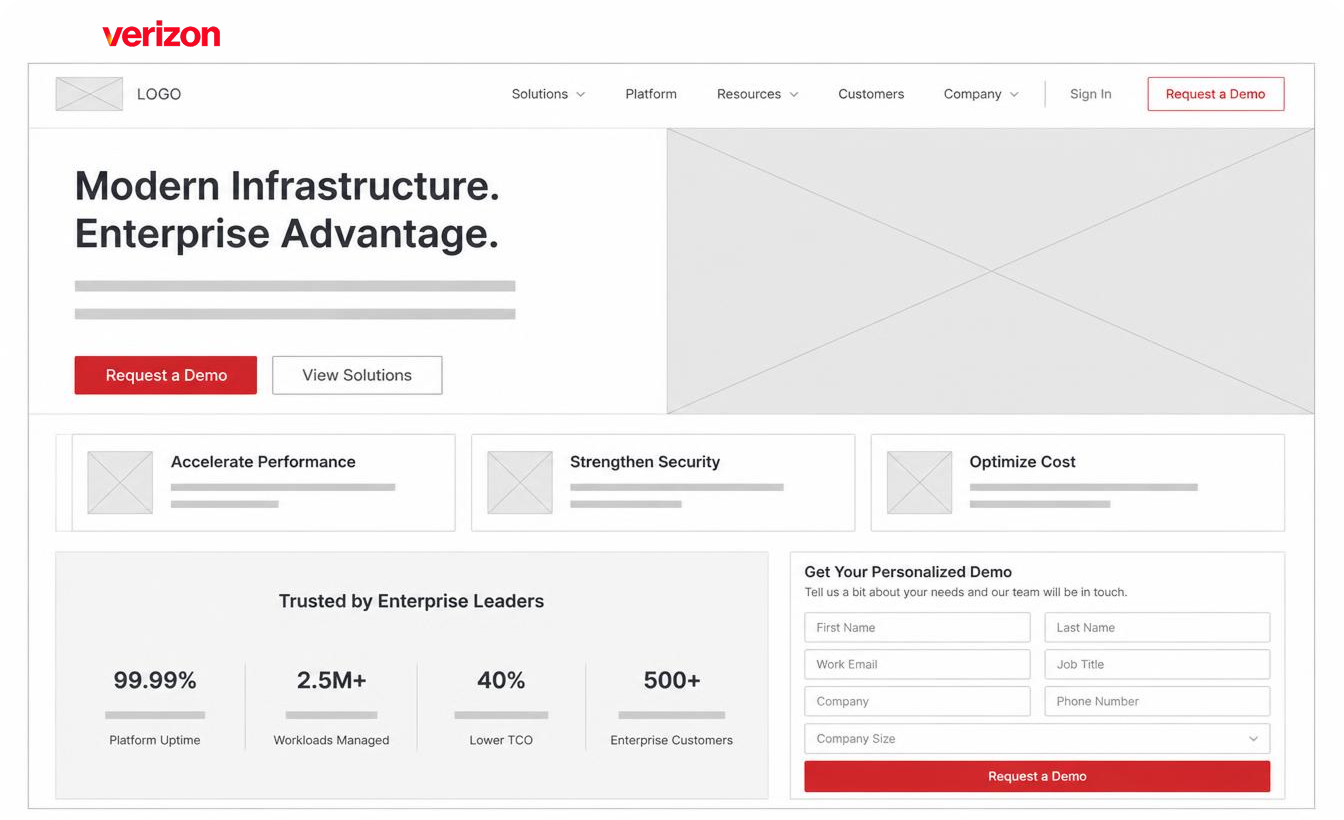
- The Dual-Conversion Mandate: The experience had to convert two wildly different user intents simultaneously: immediate online checkouts for transactional products, and localized appointment bookings for enterprise-tier custom services.
Business Outcome=
Funnel Optimization
The personalized pillar landing pages directly supported Verizon Business’s historic rise to #1 in Customer Satisfaction for both Large Enterprise and Medium Business in the 2026 J.D. Power Study, sweeping the digital account management and sales representation categories.
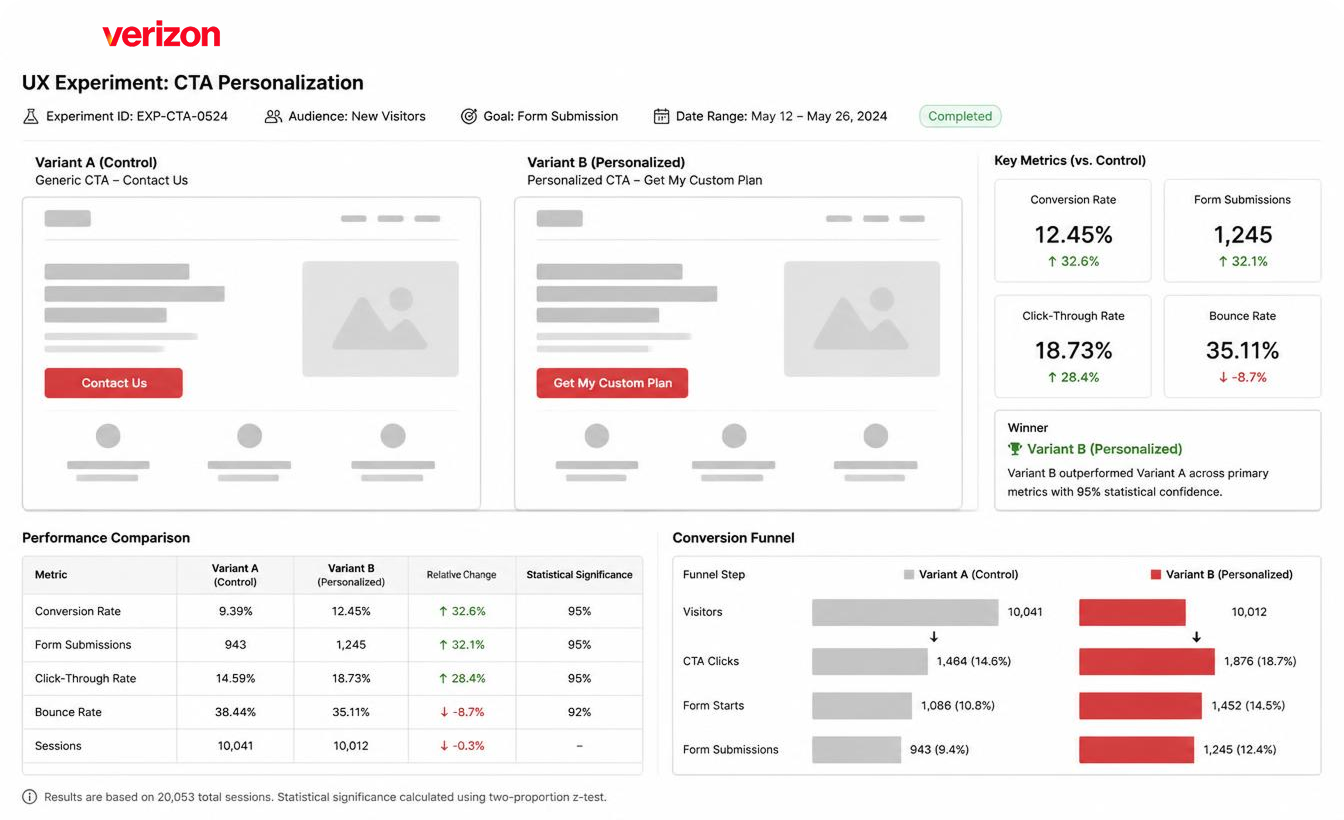
The conversion-focused layout hierarchy and optimized CTA pathways contributed to a massive multi-quarter acquisition wave, helping Verizon beat Wall Street estimates with 184,000 monthly postpaid phone customer additions.
Lessons Learned &
Future Iterations
- In hindsight, designing within the rigid boundaries of Marketo early on was a blessing. It taught me that enterprise UX isn’t just about beautiful Figma files; it’s about engineering solutions that survive the constraints of legacy marketing tech stacks.
- If I were to scale this further today, I would push for deep, real-time algorithmic personalization similar to Netflix’s dynamic artwork generation where the landing page layout updates its visual imagery based on the specific industry vertical (e.g., healthcare, logistics, finance) of the incoming IP address, making B2B storytelling feel deeply individual.
